Eating Disorder or Eating Distress.
I believe that what we call eating disorders are better understood as distress related to food, rather than a personal flaw or disorder. My perspective is that eating difficulties reflect distress, not a disorder.
Have you spent years constantly dieting, stepping on the scales, and feeling disappointed with your appearance—never quite feeling good enough? Do you find yourself eating in secret, using food to cope with stress or soothe difficult emotions, only to be followed by shame and regret?
An unhealthy relationship with food often reflects a deeper struggle with how we relate to ourselves. For many, food becomes a way to manage emotional challenges or life stressors.
Although the term “eating” is in the name, the behaviours we engage are rarely about food itself. Food is a symptom—an outward sign of underlying emotional difficulties that need understanding and support.
The three more common types of eating disorders are:
Anorexia Nervosa
Binge Eating Disorder
Bulimia Nervosa
Signs and Symptoms of Anorexia Nervosa
Anorexia nervosa is more than just changes in weight—it affects the body, mind, and daily life. Common signs include:
Fatigue, dizziness, or feeling cold
Noticeable weight loss or being underweight
Hair thinning, brittle nails, or dry skin
Intense fear of gaining weight
Distorted body image
Anxiety, low mood, or perfectionism
Preoccupation with food, calories, or dieting
Restricting food or skipping meals
Excessive exercise
Labeling foods “good” or “bad”
Ritualistic or secretive eating habits
Signs and Symptoms of Binge Eating Disorder (BED):
Binge Eating Disorder is a serious eating difficulty characterised by recurring episodes of eating large amounts of food in a short period, often accompanied by feelings of loss of control. Unlike other eating disorders, these episodes are not followed by purging (like vomiting or excessive exercise).
Feeling unable to control eating during binges
Eating rapidly or until uncomfortably full
Eating in secret or hiding food
Frequent dieting without long-term success
Feelings of shame, guilt, or distress after eating
Preoccupation with food, weight, or body shape
Low self-esteem or anxiety related to eating
Using food to cope with stress or emotions
Weight fluctuations or obesity (though BED affects people of all sizes)
Digestive discomfort, bloating, or stomach pain
Fatigue or sleep disturbances
Signs and Symptoms of Bulimia Nervosa:
Bulimia nervosa is an eating disorder characterised by cycles of binge eating followed by compensatory behaviours, such as vomiting, excessive exercise, or misuse of laxatives, to prevent weight gain.
Recurrent episodes of eating large amounts of food
Feeling out of control during theses episodes
Purging through vomiting, laxatives, diuretics, or excessive exercise
Secretive eating or hiding food
Frequent dieting or rigid food rules
Recurrent episodes of eating large amount of food
Self-induced vomiting
Misuse of laxatives or diuretics
Excessive exercise
Fasting after binges
Eating in secret or disappearing after meals
Strong fear of gaining weight
Self-worth overly tied to body shape or weight
Intense guilt, shame, or disgust after eating
Anxiety or depression
Mood swings
Feeling “out of control” around food
Low self-esteem
Support For Eating Distress
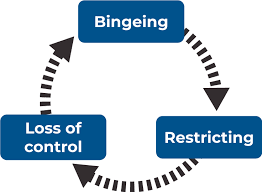
It’s important for you to know that you are not alone in this difficult cycle, and with the right support, it is possible to break free from it.
I will help you recognize unhelpful behaviors, explore the underlying factors contributing to disordered eating, reduce feelings of shame, develop healthier coping strategies for managing emotions, and build a positive, balanced relationship with food and with yourself.